


What Is a Visual Aura?
A visual aura is a temporary disturbance of vision that occurs in some people with migraine shortly before a headache attack or at the same time as it.
It is important to understand that the source of the problem is not the eyes.
Although the symptoms are experienced as visual disturbances, the eyes themselves are usually completely healthy. The cause lies in the visual cortex of the brain — the area responsible for processing information received from the eyes.
What Does a Visual Aura Look Like?
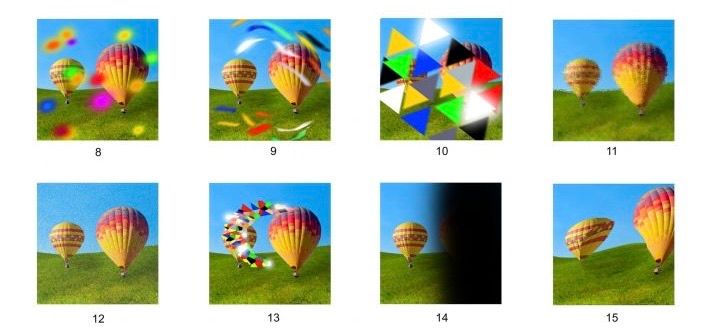
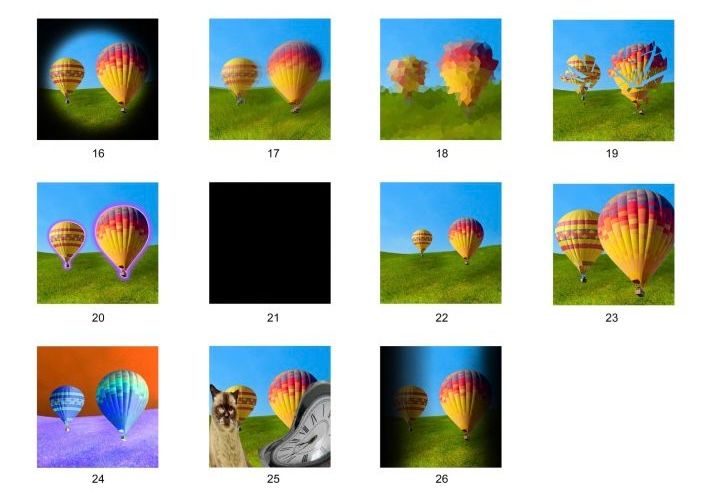
If you ask ten people with migraine to describe their aura, you may receive ten different answers. Nevertheless, several classic patterns are commonly recognized.
A Shimmering Zigzag
This is the most characteristic form of aura.
A sparkling, jagged line appears in the visual field, resembling a lightning bolt, the teeth of a saw, or the walls of a fortress. Neurologists even use a specific term — fortification spectrum — because the pattern resembles the defensive walls of a medieval fortress.
The zigzag usually does not remain stationary. It slowly expands, flickers, and gradually moves across the visual field.
A Bright Spot
Sometimes the aura begins as a small bright spot in the center of vision.
Over time, it enlarges, making it difficult to read, distinguish fine details, or focus on another person’s face.
A Missing Area of Vision
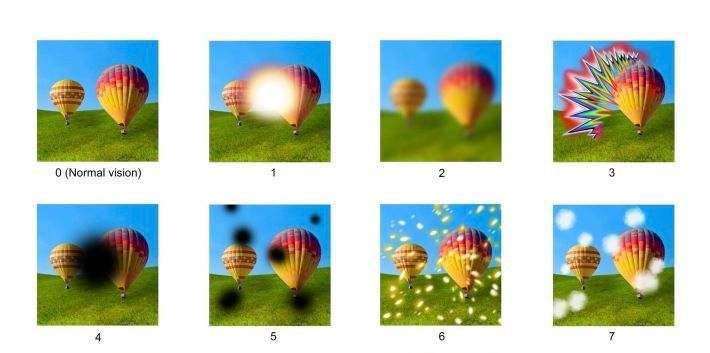
In some people, the aura appears not as the addition of something visual, but rather as the disappearance of part of the image.
For example, you may look at a clock and notice that half the numbers seem to have been erased. Or you may see a person’s face but be unable to perceive one eye.
This phenomenon is known as a scotoma.
Flashes and Sparks
Some patients describe their aura as a shower of glittering sparks, camera flashes, or flickering stars.
Distorted Vision
Less commonly, objects may appear wavy, warped, unusually enlarged, or unusually small. It is as though the brain decides to experiment with visual processing for a few minutes.
How Does an Aura Develop?
One of the defining features of a migraine aura is its gradual progression.
Symptoms do not appear instantaneously. A small shimmering spot slowly enlarges, evolves into a zigzag pattern or an area of visual loss, spreads across the visual field, and eventually disappears.
Most episodes last between 5 and 60 minutes.
The most typical duration is approximately 20–30 minutes.
This gradual evolution often helps physicians distinguish migraine aura from other neurological conditions.
Why Does a Visual Aura Occur?
Today, we have a fairly good understanding of what happens during an aura, although we still cannot explain precisely why it occurs on a particular day or at a particular moment.
It is known that the brains of people with migraine are characterized by increased excitability. This is not a disease or brain damage, but rather an individual neurobiological trait.
At a certain point, a wave of electrical activity develops in the visual cortex and slowly propagates across the surface of the brain. Following this brief period of excitation, the affected neurons become less active for a period of time. This process is known as cortical spreading depression.
Despite its name, it has nothing to do with psychiatric depression or the death of brain cells. It is simply a temporary change in neuronal activity.
As this wave travels through the visual cortex, a person may perceive flashes of light, shimmering zigzags, or areas of visual loss.
A logical question then arises: what triggers this wave?
Current research suggests that a migraine attack probably begins long before the aura appears.
Several hours — or sometimes even a day — before an attack, many patients notice unusual symptoms, including:
• frequent yawning;
• drowsiness;
• increased fatigue;
• cravings for sweet foods;
• changes in appetite;
• irritability;
• difficulty concentrating.
Most of these functions are regulated by the hypothalamus — a small region of the brain responsible for sleep, wakefulness, appetite, hormonal balance, and the body’s internal biological clock.
Studies have shown that hypothalamic activity begins to change even before the onset of headache and aura. For this reason, many researchers now believe that migraine attacks may originate in this region.
A likely sequence is this: the function of deep brain structures changes first, then cortical spreading depression develops in susceptible individuals, producing the aura, and finally the pain-processing system becomes activated, leading to headache.
In other words, visual aura is not the beginning of a migraine attack — it is one stage of a process that has already begun.
Does a Headache Always Follow the Aura?
No.
In many people, a typical migraine attack develops after the aura, including throbbing headache, nausea, and increased sensitivity to light and sound.
However, the aura may occur at the same time as the headache or even in the absence of headache altogether.
This condition is known as typical aura without headache. It is sometimes also referred to as acephalgic migraine or silent migraine.
It is particularly common in older adults.
One Eye or Both?
Almost every patient is convinced that the problem affects only one eye.
This is understandable because the symptoms are visual.
However, a typical migraine aura almost always affects both eyes simultaneously, because it originates in the brain.
During an episode, a simple experiment can be performed: cover one eye and then the other. If the visual phenomenon remains present regardless of which eye is closed, migraine aura is the most likely explanation.
If the visual disturbance occurs in only one eye, the situation requires separate medical evaluation.
Is It Definitely a Migraine Aura?
Visual aura can resemble other neurological disorders, so it is important to understand the key differences.
Migraine or Stroke?
Migraine aura is typically characterized by so-called positive symptoms — the brain appears to add visual information. Examples include:
• flashes of light;
• shimmering patterns;
• sparkling zigzags;
• moving geometric designs.
The symptoms also tend to develop gradually.
Stroke, in contrast, more often causes negative symptoms, involving loss of function. A person may suddenly lose part of the visual field, become unable to move an arm, or develop difficulty speaking.
Simply put, migraine aura usually adds something to perception, whereas stroke usually takes something away.
Nevertheless, any first-time neurological symptom requires urgent medical assessment.
Migraine or Epilepsy?
Visual symptoms may also occur in occipital lobe epilepsy.
However, epileptic visual phenomena usually:
• develop very rapidly;
• last only seconds or a few minutes;
• are highly stereotyped from one episode to the next.
Migraine aura, by contrast, develops gradually and generally lasts much longer.
Migraine or a Retinal Disorder?
A classic migraine aura usually affects both eyes simultaneously.
If vision loss occurs in only one eye — especially if it resembles a dark curtain or shadow descending over vision — urgent medical evaluation is necessary. In such cases, the problem may originate in the retina or in the blood vessels supplying the eye rather than in the brain.
When Should You Definitely See a Doctor?
Even if the symptoms resemble migraine aura, medical evaluation is necessary if:
• the aura occurs for the first time in your life;
• the first episode develops after age 50;
• symptoms begin suddenly and reach maximum intensity immediately;
• visual symptoms last longer than 60 minutes;
• vision does not fully recover;
• weakness develops in an arm or leg;
• speech difficulties occur;
• altered consciousness develops;
• the symptoms differ significantly from previous attacks.
Neurologists often follow a useful rule: if an aura has occurred for many years in the same stereotyped pattern, it is usually a typical manifestation of migraine. However, any new, unusual, or changing attack deserves medical attention.
What Should You Do During an Aura?
First and foremost — do not panic.
Although a visual aura can appear dramatic and alarming, it usually resolves on its own.
If symptoms occur while driving, pull over safely and stop driving. If you are working at a computer, take a break. Some people find relief by resting in a quiet room with dim lighting.
For many patients, the aura serves as an early warning sign of an impending migraine attack and provides an opportunity to take prescribed medication promptly.
Key Takeaways
Visual aura is one of the most unusual manifestations of migraine. It may appear as shimmering zigzags, flashes of light, bright spots, or areas of visual loss.
The source of these symptoms is not the eyes but the brain. During an aura, a wave of temporary changes in neuronal activity travels through the visual cortex, producing characteristic visual phenomena.
In most cases, visual aura is harmless and completely reversible. However, any first-time, unusual, or changing symptoms should be evaluated by a healthcare professional, as certain serious medical conditions can present in a similar manner.